
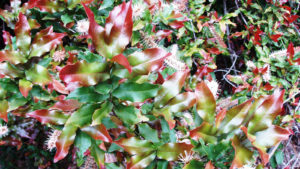
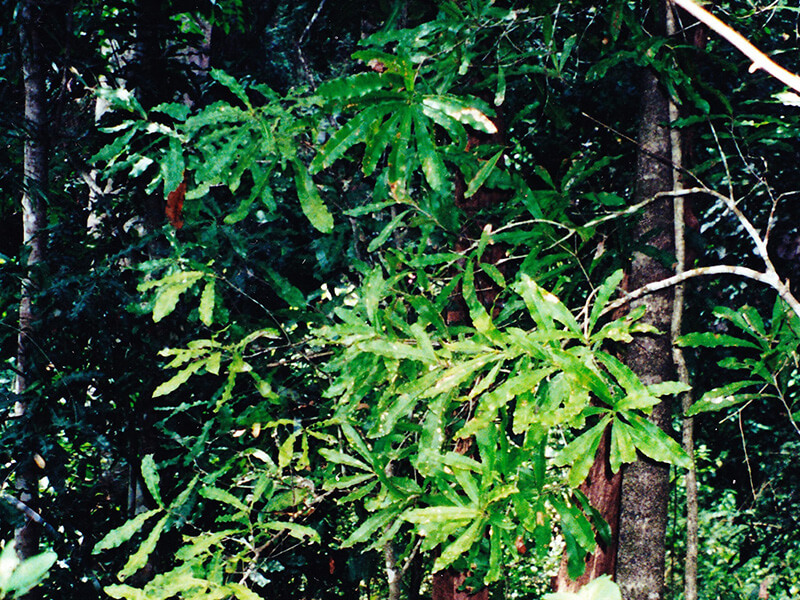
Macadamias originated in the rainforest on the east coast of Australia and Australia is the only country in the world where they naturally grow in the wild.
There are four species of macadamia, found in small mostly isolated rainforest pockets from Lismore in the south to north of Bundaberg. All four species are listed as threatened under Queensland, New South Wales and Commonwealth legislation and are listed in the International Union for the Conservation of Nature and Natural Resources (IUCN) 1997 Red List for Threatened Plants; the legacy of a naturally scattered distribution combined with habitat loss and other impacts.
The loss of most of macadamias’ rainforest habitats has put at risk the many other native plant and animal species that share these habitats, including Coxen’s Fig-parrot, Spotted-tailed Quoll, Giant Barred Frog, Richmond Birdwing Butterfly and a multitude of plant species. Much of the habitat itself is considered threatened and included in the critically endangered Lowland Rainforest of Subtropical Australia ecological community.
Macadamias are an Australian icon, they are part of our heritage and a food that has long been treasured and traded by Australia’s traditional owners and which is now enjoyed by people all over the world.
Conserving our wild species also plays an important role in supporting the macadamia industry. The genetic diversity found among wild plants could help the industry adapting to changes in weather patterns, emerging pests and possible diseases. Australia is a signatory to the International Treaty on Plant Genetic Resources for Food and Agriculture. Under the terms of this agreement, Australia is required to conserve the genetic resources of macadamia species for food and agricultural purposes. Whilst over 80% of wild macadamia trees have been lost since European settlement, a lot is now being done to secure their future; with your help we can do more.
You can help
Becoming a Wild Macadamia Champion is free. Sign up and stay connected to the work being done to protect Australia’s wild macadamias.