
• Skip to main content
  • Skip to header right navigation
  • Skip to site footer
Wild Macadamia Conservation

Wild Macadamia Conservation

  • Home
  • Rare Macadamias
    • Walk with Wild Macadamias
    • The Macadamia history book
    • Why conserve Macadamias?
    • The Four Macadamias
    • Where are wild Macadamias found?
    • Threats facing wild Macadamias
    • History
  • About Us
    • Our Organisation
    • Our People
    • Supporters
  • Donate Now
  • What we do
    • Macadamia Conservation Research Grants
    • News and Projects
    • Resources
    • FAQ
  • Contact Us

Macadamia tetraphylla root-fungi-soil interactions

You are here: Home / Research / Macadamia tetraphylla root-fungi-soil interactions
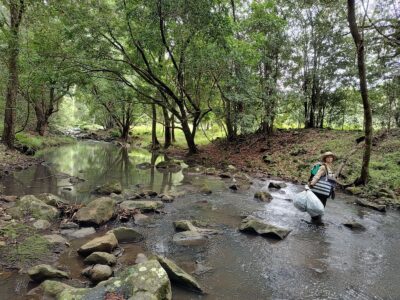
Researcher crossing a creek
The intrepid researchers ford creeks and give resident cows and bulls a wide berth to get to a site
November 14, 2025 by Wild Macadamia Conservation

This project seeks to investigate which fungal groups are associated with the roots of M. tetraphylla.  Mollie will use eDNA techniques to look at the M. tetraphylla root mycobiome – that is, the fungal community that lives within plant roots. This includes mycorrhizal fungi that can grow around and inside roots and even into the root cells.  These interactions take many forms – the Australian National Botanic Gardens gives a great introduction to this important fungal group.

In Wild 4 Macadamias #4 I wrote about the proteoid cluster roots that macadamias sometimes use to access phosphorus from soil.  Knowing if and how the mycobiome interacts with proteoid roots will add to our understanding of what macadamias need to survive in the wild. Macadamias are clearly adept at making the most of scarce resources, as they can grow in a cup-full of soil and leaf litter in a boulder depression, and yet they are also particular about where they grow, given their limited range on the eastern-most tip of Australia.
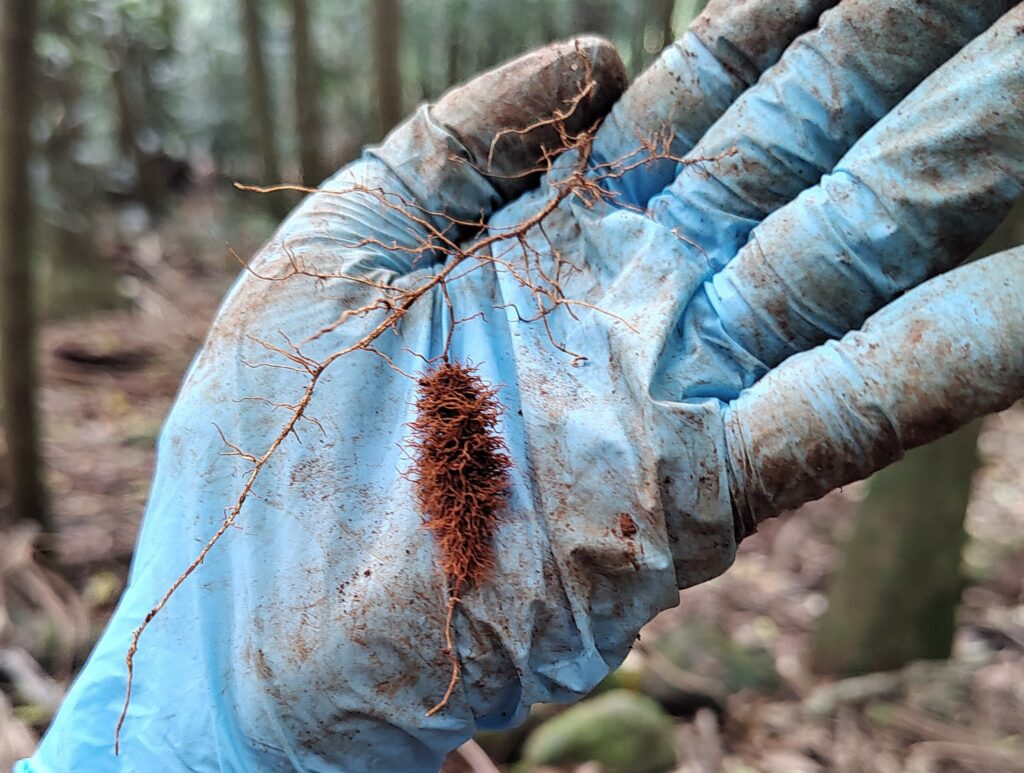
Proteoid root form on a wild Macadamia tetraphylla root

Mollie Cooper at Southern Cross University is the first researcher to look at these interactions for Macadamia tetraphylla in its natural habitat, supported by the inaugural Ian and Janet McConachie Macadamia Conservation Research Grant.
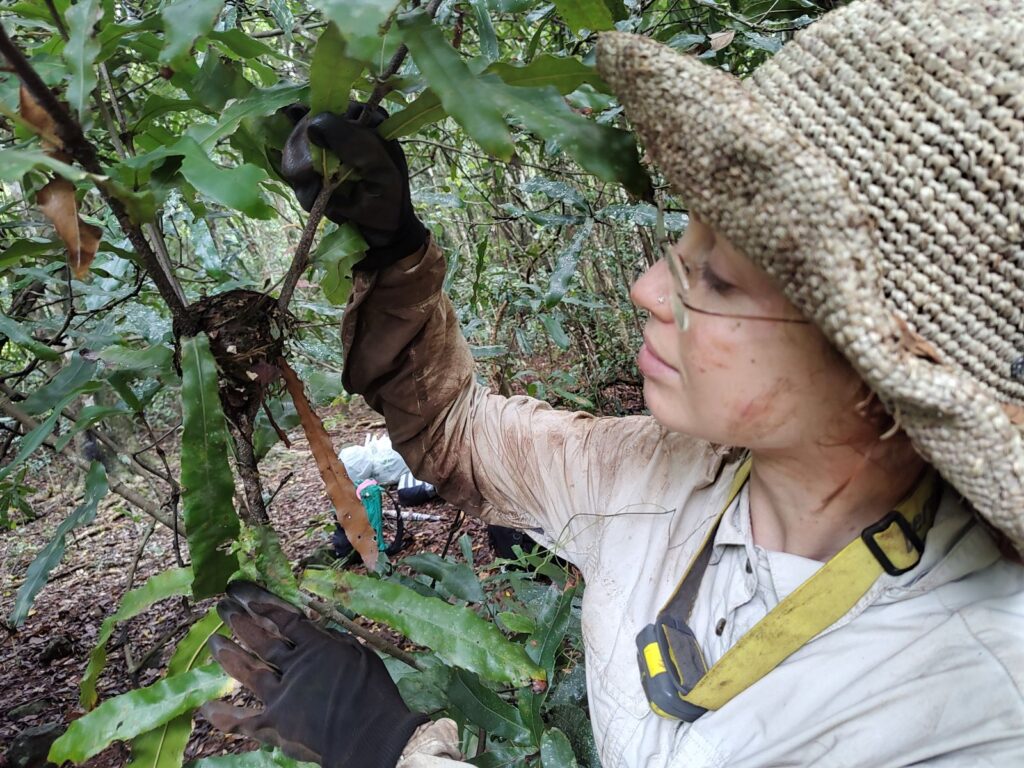
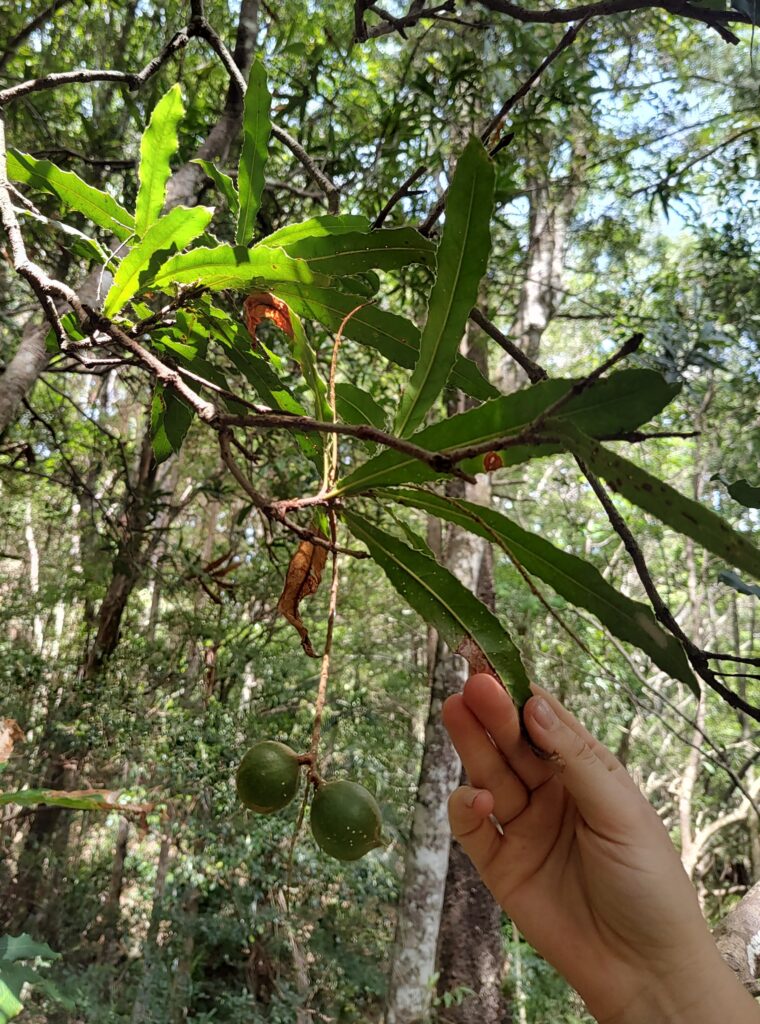
Mollie finds M. tetraphylla supporting the local birdlife
Two nuts on wild M. tetraphylla
Smiles all round as we find a wild tree with nuts, surrounded by healthy seedlings of various ages
Previous Post:Seed banking for Macadamias – is it possible?
Next Post:Tissue Culture in the Tool-Kit for endangered Macadamia jansenii

Sidebar

Become a Wild Macadamia Champion

Join Us

Donate to Macadamia Conservation

Please support Wild Macadamias by giving a tax-deductible donation.

Donate Now

Quick Contact

  • Rare Macadamias
  • About Us
  • News and projects
  • Join Us
  • Contact Us
  • Facebook
  • YouTube

Wild Macadamia Conservation

Email: info@wildmacadamia.org.au
Mobile: 0488 432 226

WMC pays respect to First Nations’ people and cultures. We acknowledge the Traditional Owners of macadamia habitat and their long and continuing custodianship of Country.


Copyright © 2025 · Wild Macadamia Conservation · Privacy Policy · Site by Kingfisher

Become a Wild Macadamia Champion

Please support macadamia conservation by joining us today!

Signing up is free, and we’ll send you two Email newsletters per year.

We will not share your details with anyone else, or send out lots of unsolicited emails.

Keep informed about conservation activities and opportunities and show your support for macadamia conservation.

Subscribe

* indicates required

You can contact the Macadamia Conservation Trust
via one of the following ways or via our contact page:

Macadamia Conservation Trust
Email: info@wildmacadamia.org.au
Mobile: 0488 432 226